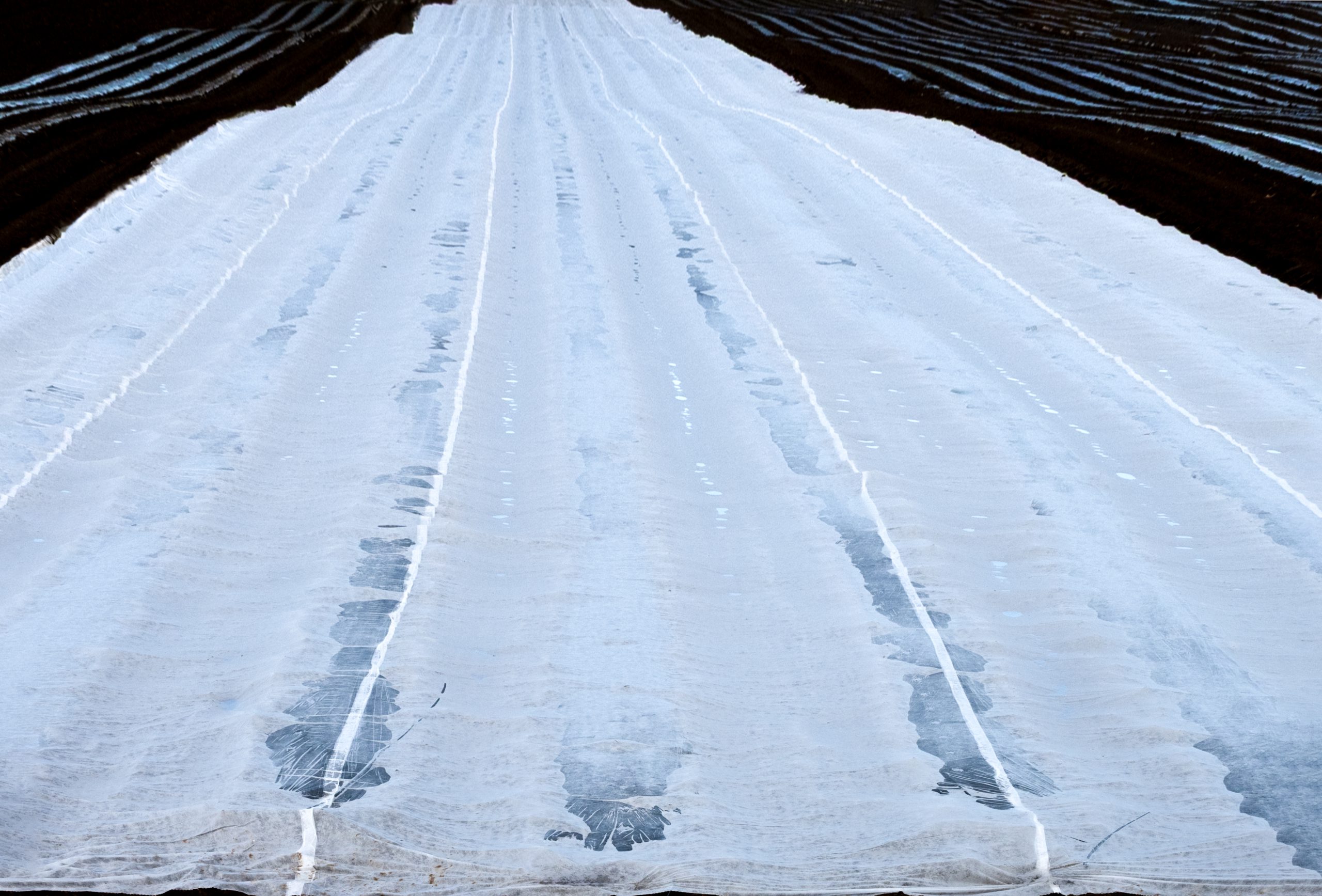
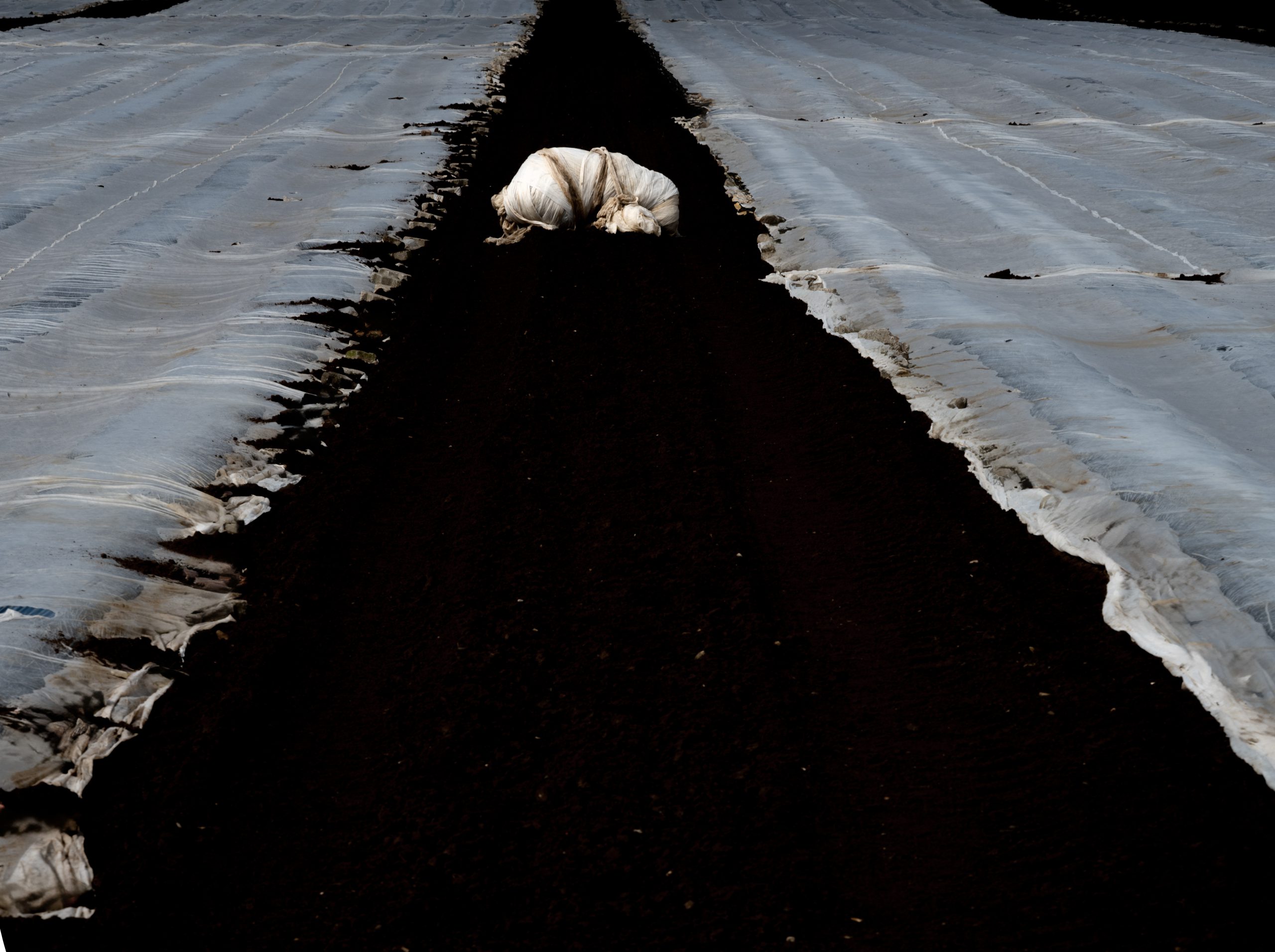
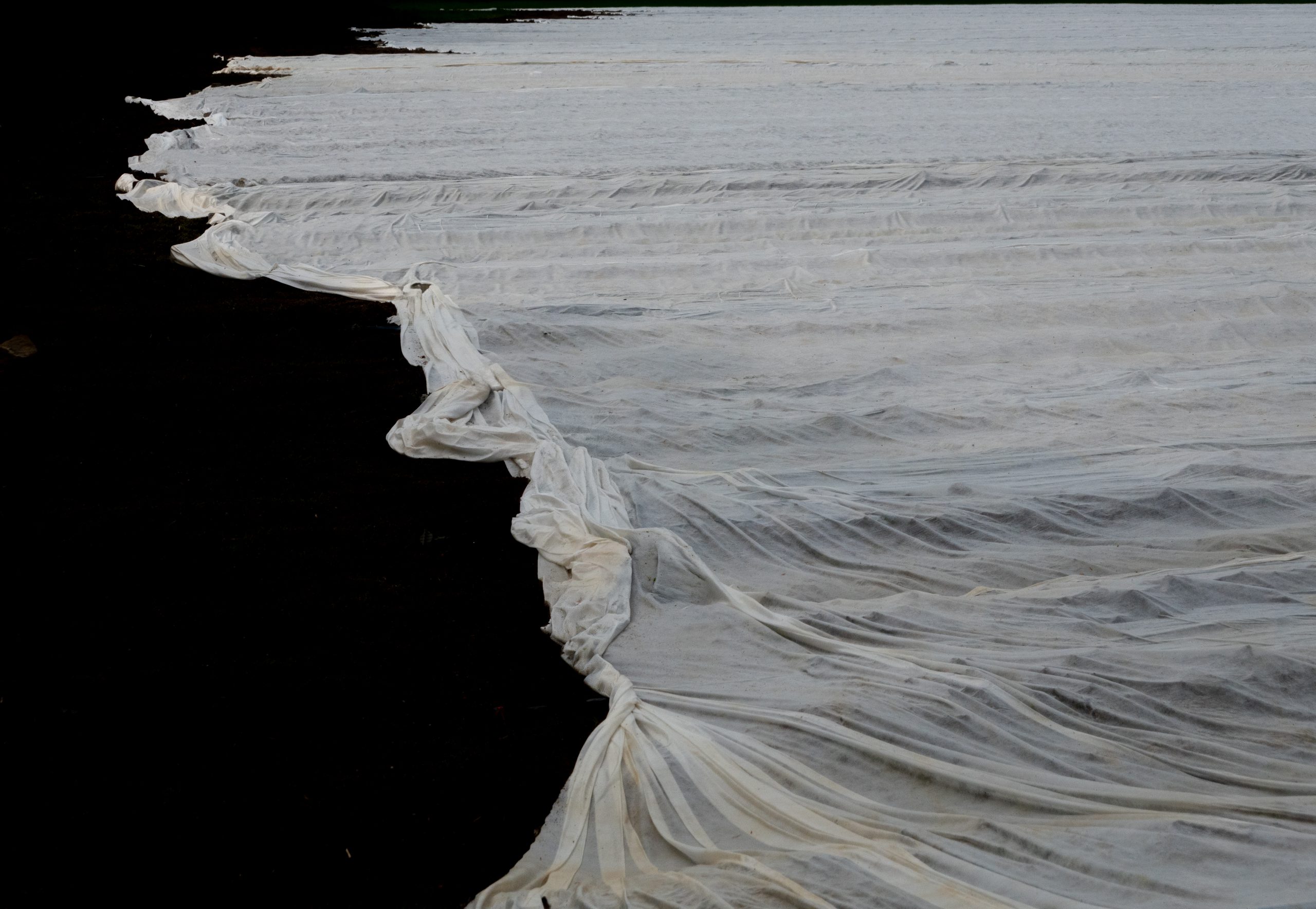
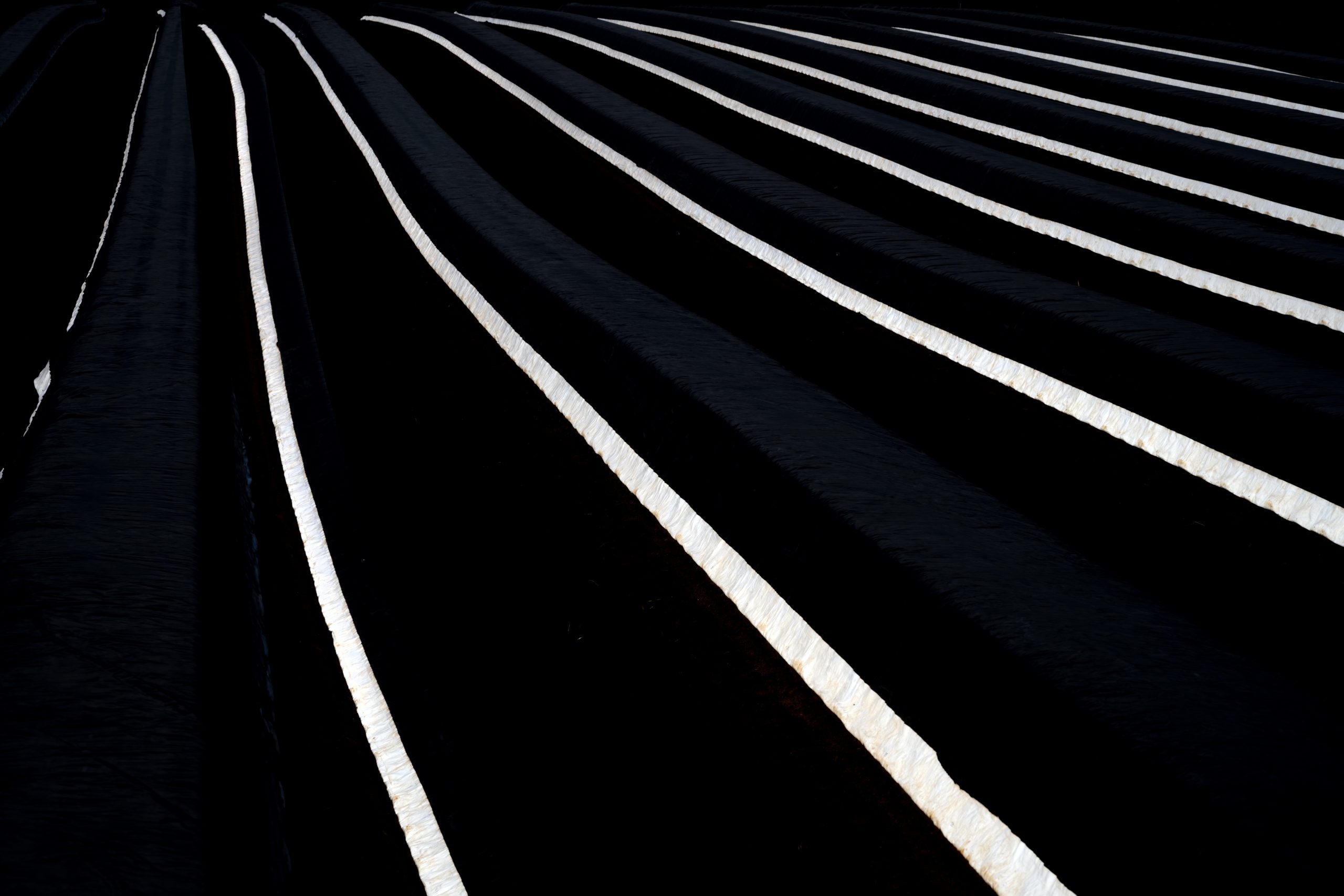
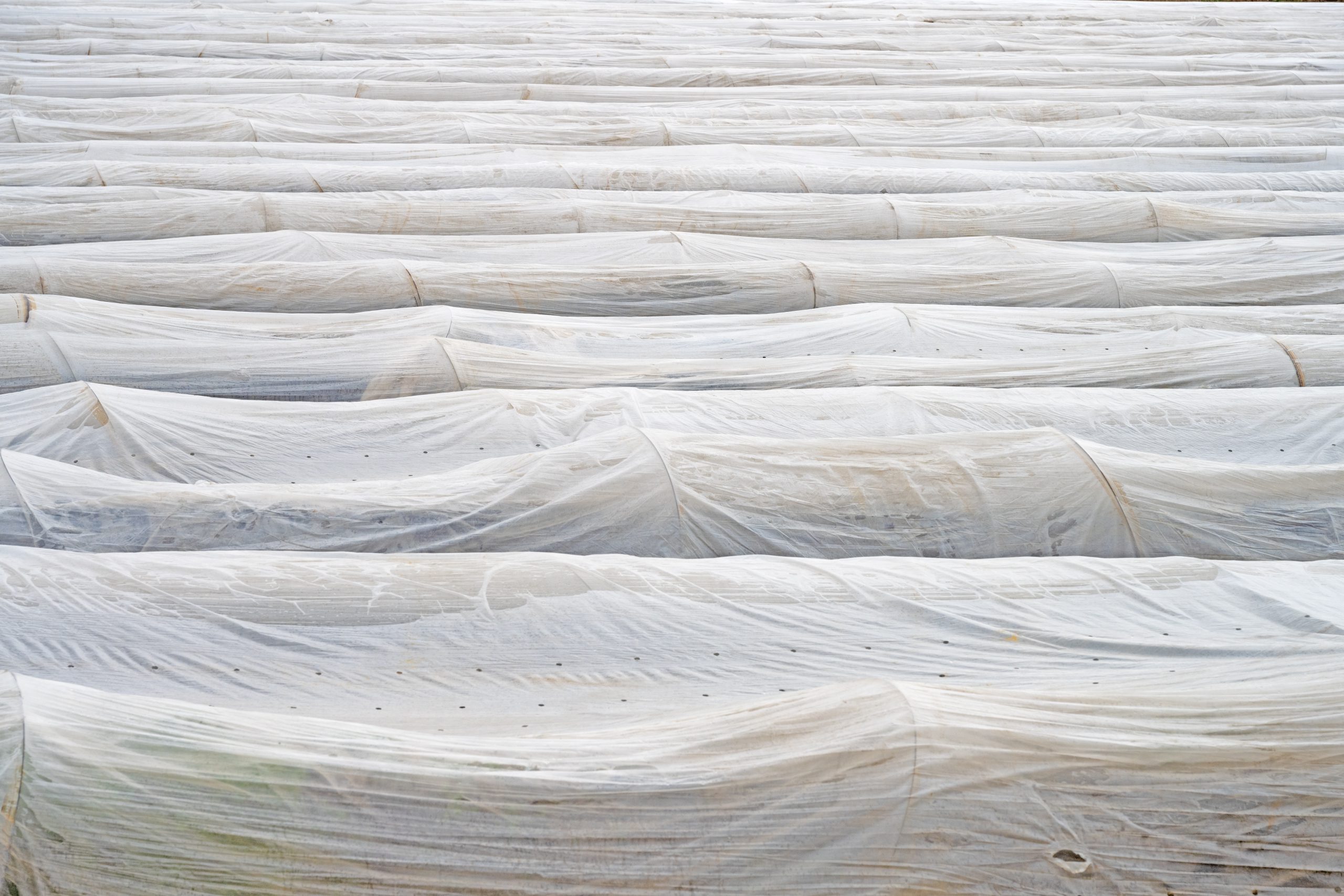
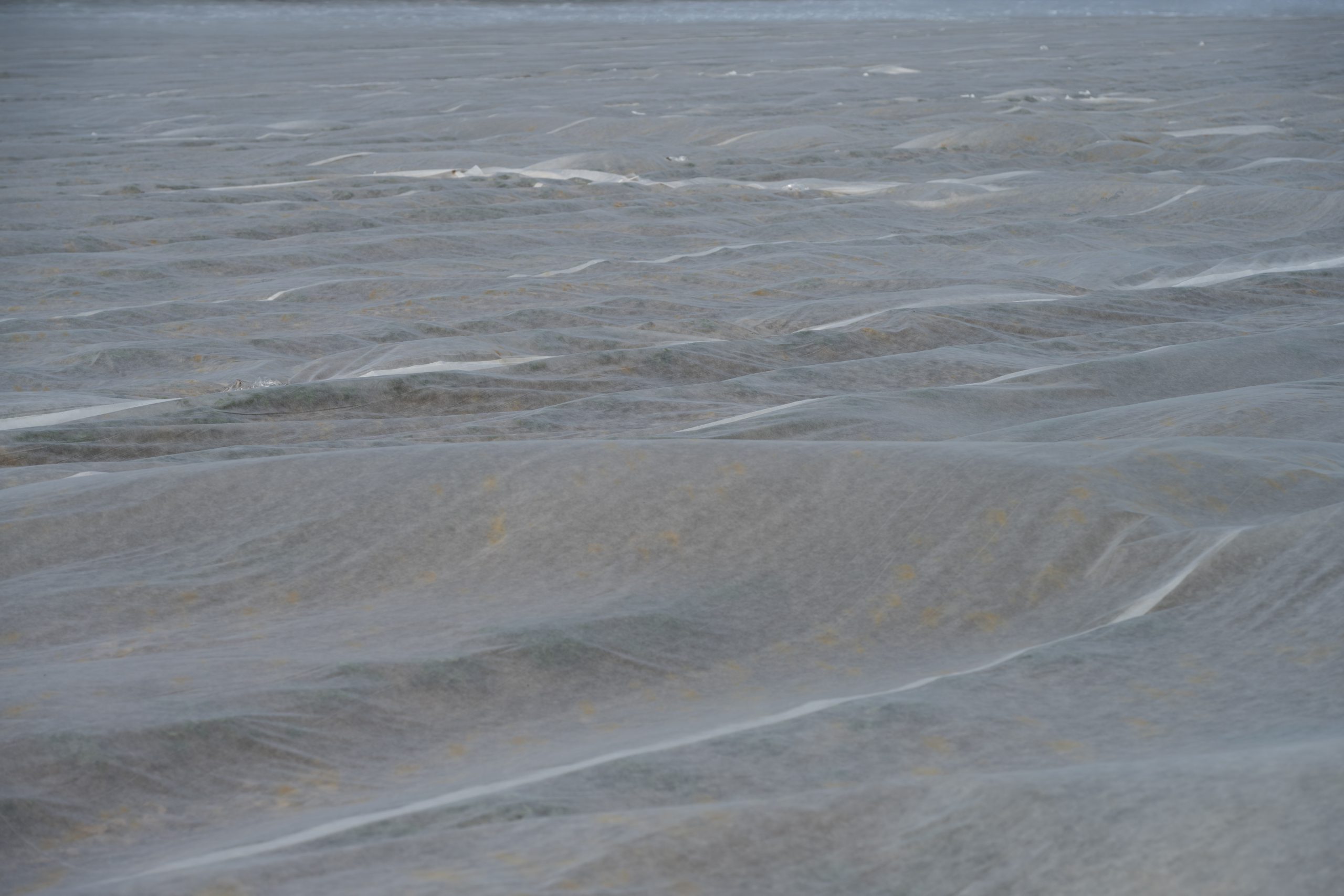

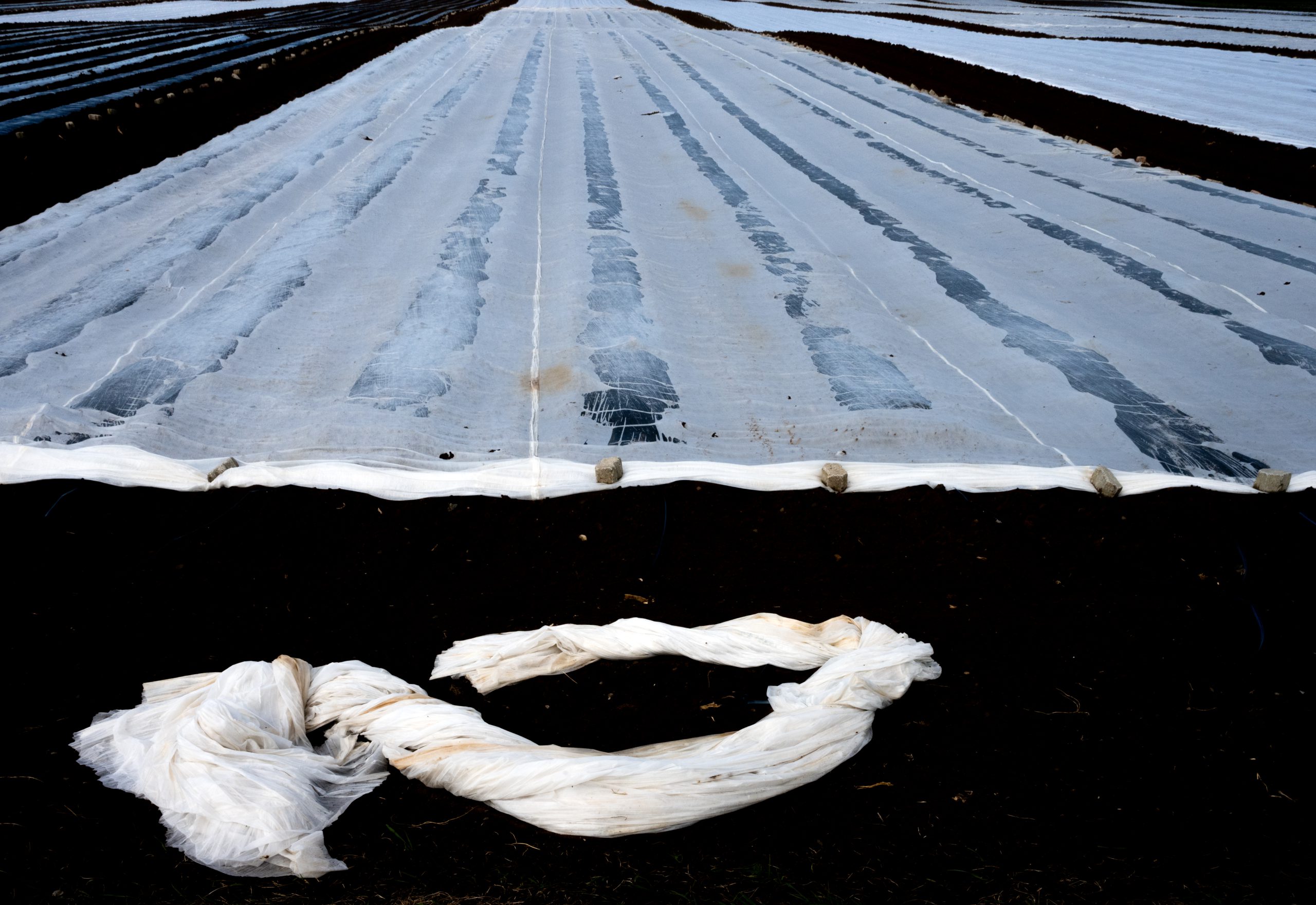
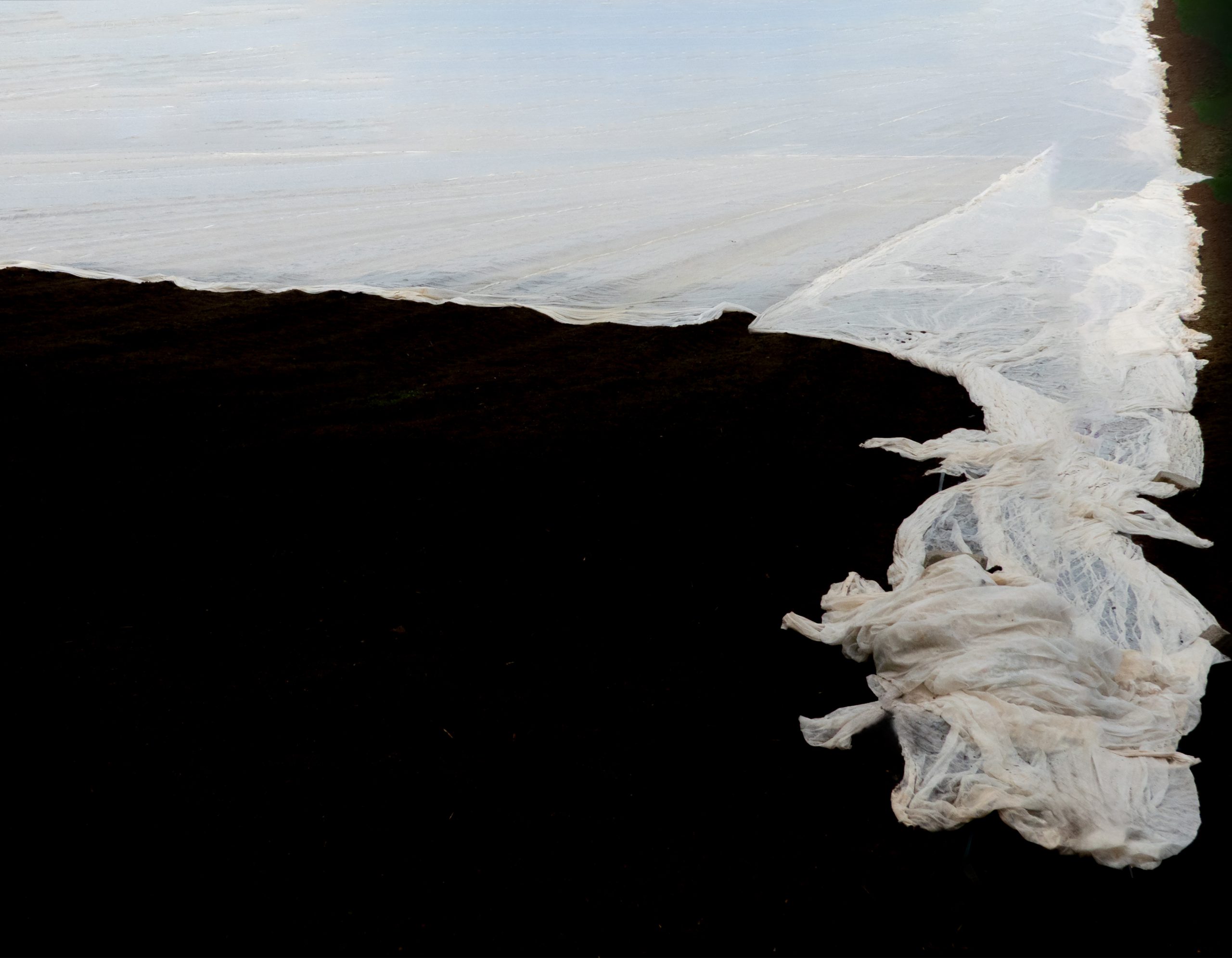
The “Waves” series explores a phenomenon that becomes increasingly common toward the end of winter and shapes entire landscapes: fields covered with plastic sheeting designed to accelerate and bring forward the cultivation of fruits and vegetables.
This form of agriculture is highly specialized today. It relies on black-and-white reversible films and plastic tunnels, the use of which requires considerable technical and material investment—an investment that is apparently justified by the increased yield.
At the same time, a serious problem arises: the disposal of the resulting plastic waste. It is not uncommon for discarded tarps to be disposed of improperly or even plowed into the soil. They remain in the ground, decompose only slowly, and pose a long-term burden. Scattered plastic scraps mar the landscape, while residues in the soil inhibit plant growth and harm the habitats of soil organisms.
Recent studies suggest that arable soils now contain many times more microplastics than the enormous quantities of plastic found in the oceans.
And yet: As much as these coverings unfold a peculiar aesthetic—at times they appear as an original part of the landscape, like water or waves—they simultaneously symbolize human interference in natural cycles and the burdens we impose on our environment.