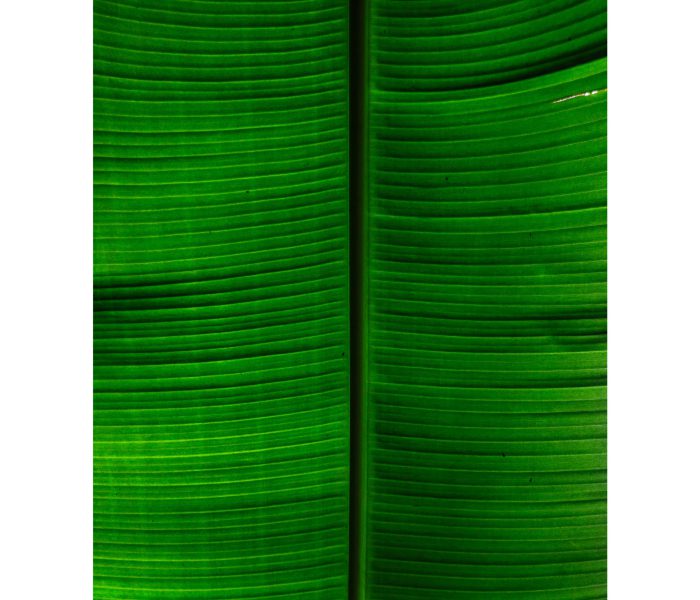
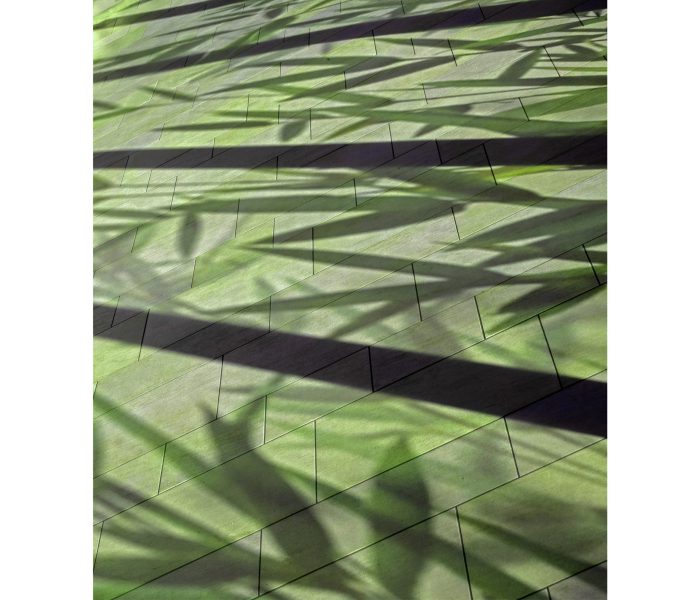
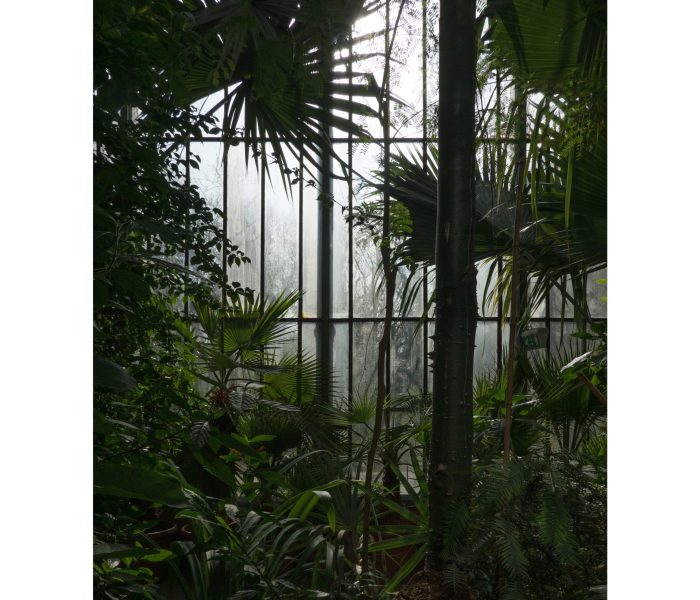
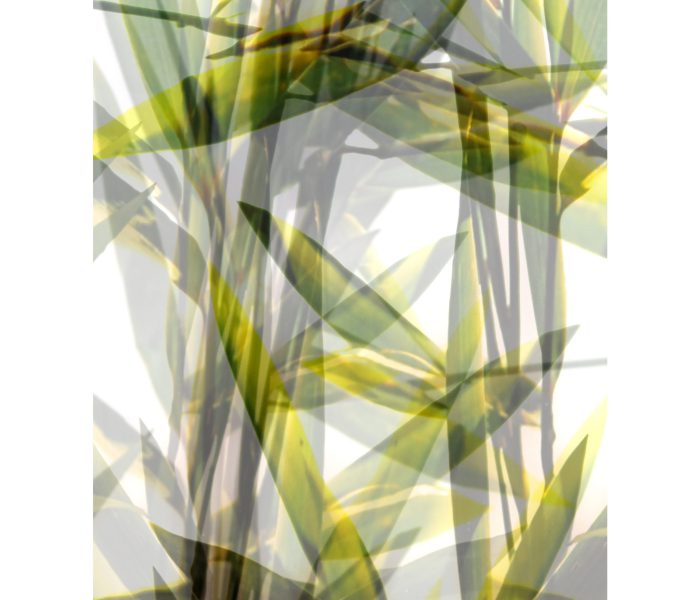
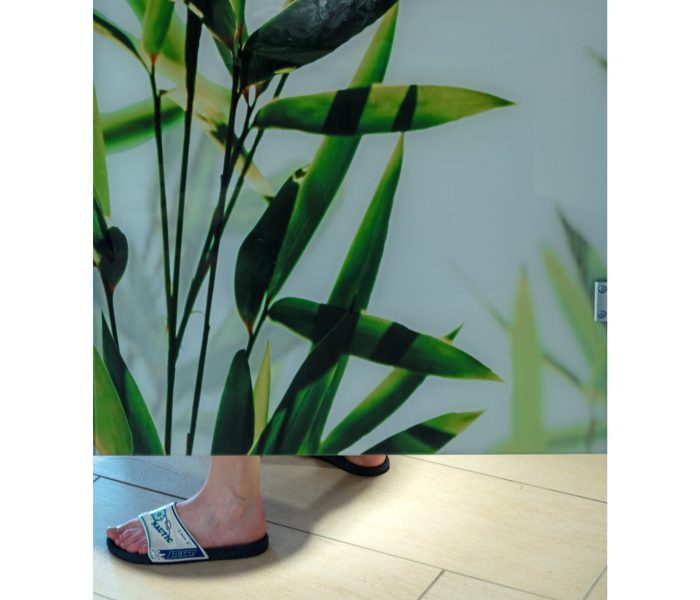

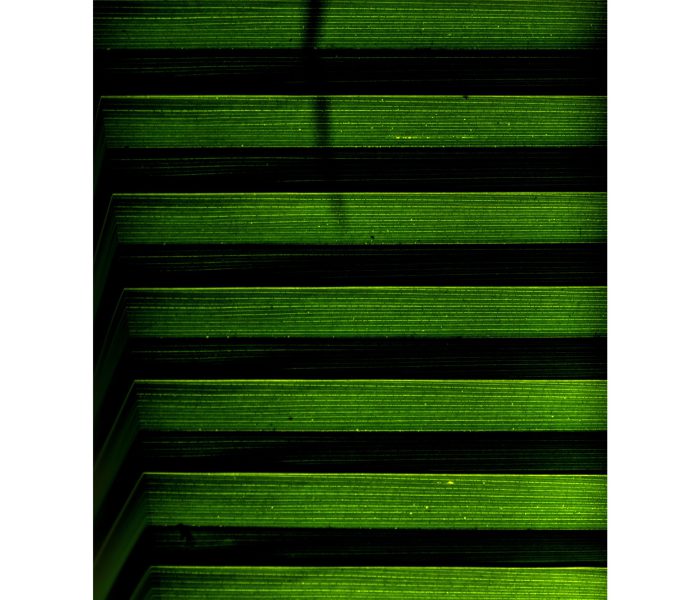
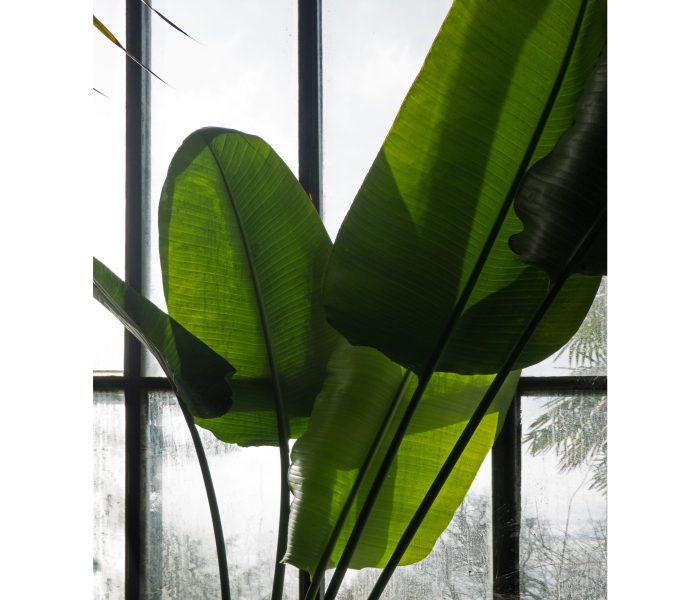
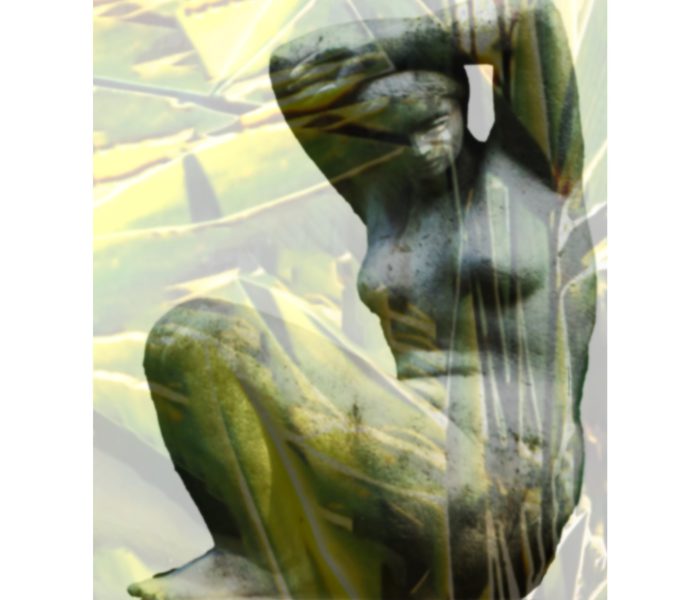
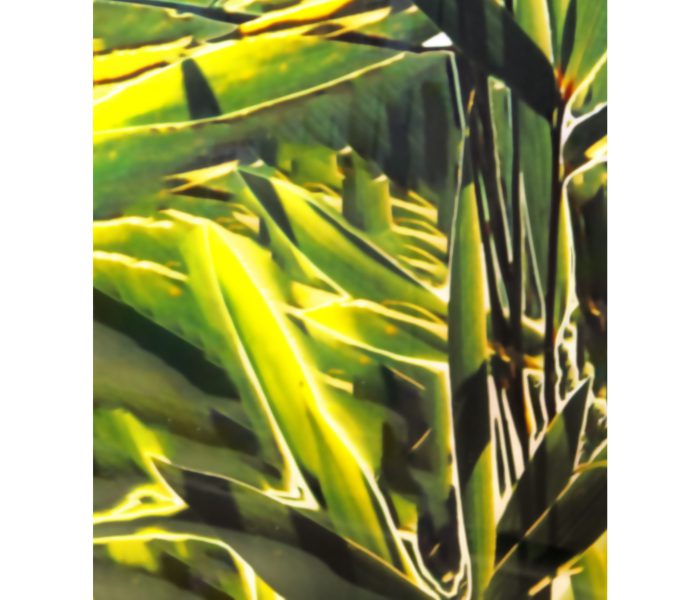

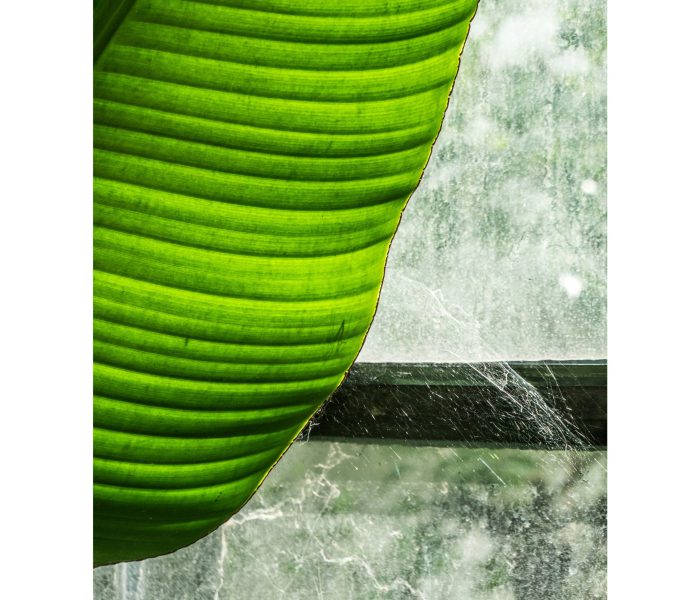
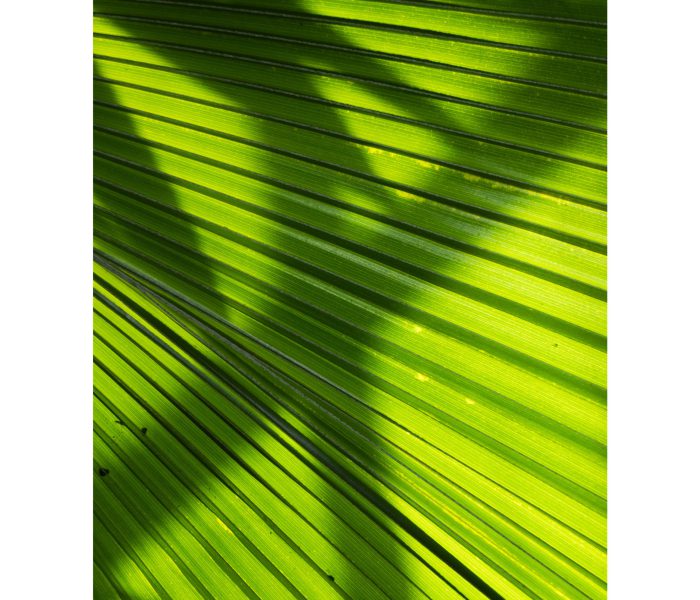
This series intertwines two visual worlds that, at first glance, promise peace and relaxation. Smooth surfaces and filtered light, artificial and stylized plants, contrast with their counterparts from greenhouses and semi-controlled natural zones.
Yet the resemblance is fragile.
While the interiors aim for purity and order, the plant images show signs of time: dust, cobwebs, overlays, disturbances, traces of neglect. Nature appears here as decoration, but also as something independent that eludes complete control.
The series explores this shift: When does nature become a surface? When does staging tip over into something fragile, something unkempt? When does something perhaps even uncanny emerge? The repetition of graphic elements and colors visually connects the images, while small disruptions undermine the expected harmony. The supposedly soothing reveals cracks.
The “wellness zone” thus becomes an in-between space—between control and growth, between relaxation and latent irritation.
The series thus reveals an ambivalence: nature functions simultaneously as an aesthetic promise and as a resistant counterpart. The formal correspondence between the images creates a visual continuity that remains fragile in terms of content. It is precisely in the overlays and irritations that it becomes apparent that the aesthetic domestication of nature never fully succeeds.
Here, nature is not a place of retreat, but a presence.